
Embankments on Slopes & Soft Ground with Lightweight Aggregates
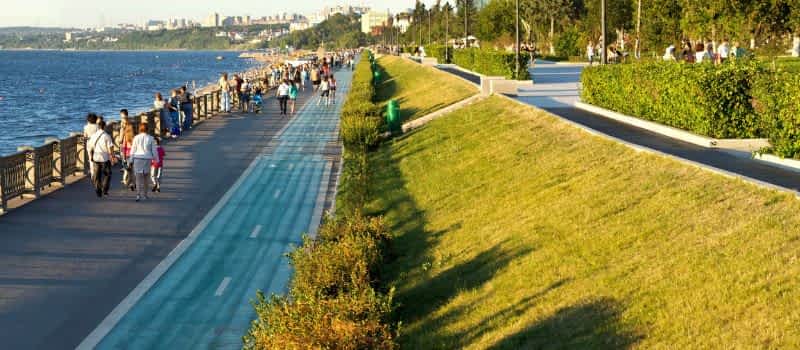
Expanded Clay Aggregate – ECA® is revolutionizing how engineers and construction professionals approach ground stabilization and embankment construction. In an industry where cost inefficiency and complex material performance have long been obstacles, this innovative lightweight aggregate offers an eco‐friendly, durable, and versatile alternative that elevates both technical performance and environmental stewardship. This breakthrough is not only about improved engineering outcomes but also about embracing a smarter, greener future for infrastructure development.
At its core, Expanded Clay Aggregate – ECA® delivers unparalleled benefits in stabilizing sloped embankments and soft ground applications. With an emphasis on sustainability, reduced carbon footprint, and superior performance under varied conditions, our material meets the rigorous demands of modern construction—ensuring that every project is efficient, safe, and built to last.
Innovative Structural Solutions: Reinventing the Approach
In today’s competitive construction landscape, industry experts are continuously seeking ways to optimize materials for cost-effectiveness and environmental sustainability. Expanded Clay Aggregate – ECA® is at the forefront of this evolution, integrating state-of-the-art technical properties with a practical approach to design and construction. This material addresses long-standing structural vulnerabilities while offering an unmatched combination of durability and versatility.
Technical Innovations that Drive Performance
Expanded Clay Aggregate – ECA® is a marvel of modern engineering, combining advanced material science with practical performance benefits. Its technical properties are tailored to meet the rigorous demands of high-stress applications, making it the go-to material for embankments on slopes and soft ground.
Environmental and Economic Advantages
Every project faces operational setbacks when traditional materials underperform, and the resulting costs can be staggering. Expanded Clay Aggregate – ECA® offers a transformative approach by significantly reducing these setbacks through efficient performance and low maintenance requirements.
Lightweight porous aggregates are widely adopted in embankments constructed on slopes and soft ground, offering load reduction, stability, and settlement control. In lightweight embankments, they minimize vertical and lateral earth pressures, allowing construction on soft soils and steep slopes without excessive settlement or failure. As granular fill solutions, porous aggregates improve drainage, shear strength, and long-term durability of embankments. These properties are crucial in highway and railway embankments, flood levees, and slope stabilization projects, where conventional fills may be too heavy or unstable. By combining low density, high permeability, and long service life, lightweight aggregates provide a sustainable, cost-effective alternative for building resilient infrastructure on challenging ground conditions.
Frequently Asked Questions
Thanks to its abrasion resistance and ability to withstand freeze-thaw cycles, Expanded Clay Aggregate – ECA® maintains its integrity even under harsh weather conditions. This durability translates into fewer maintenance requirements and a longer lifespan for structures.
Absolutely. The material’s non-reactivity and eco-friendly production process make it ideal for projects that must adhere to stringent environmental standards. Its low environmental footprint and superior performance make it a preferred choice for sustainable development.
Independent studies, technical datasheets, and research from reputable sources such as ScienceDirect and research journals have consistently shown that Expanded Clay Aggregate – ECA® delivers high performance in geotechnical applications, from lightweight embankments to granular fill solutions.
By using natural, recyclable clay and reducing the overall weight of construction materials, Expanded Clay Aggregate – ECA® helps lower transportation emissions and energy consumption. Its inert and non-toxic properties also minimize environmental impact, aligning with sustainable construction practices.
Expanded Clay Aggregate – ECA® has a low dry thermal conductivity, which makes it an excellent insulator. This property is crucial in projects where maintaining temperature stability is essential for both structural integrity and energy efficiency.